The Intelligent Invention Framework: How to Decide on Your Next Intelligence-First Investment

Dan Kraemer
Co-Founder & Co-CEO

Matthew Alverson
Partner + AI Lead
In Part 1, you scored your business on seven questions and picked the area you want to focus on first. Now comes the harder part: deciding what kind of bet to make.
"We need to do something with AI" leads to smaller, safer projects getting approved first. These are the projects that rarely change your numbers. At the same time, it’s never been easier to invent the next big thing.
Startups like Lovable and MEDVi each reached $100M+ in run-rate revenue in about 18 months, with fewer than 100 people. Adobe, Microsoft, WebMD and Walgreens had the customers and data to build those products first, but legacy workflows, enterprise sales cycles, and organizational complexity likely stood in the way.
If you own a P&L and a mandate to build new things, you hold the customers and data these startups went after. The question then is which ideas deserve the investment that invention requires.
The Intelligent Invention Framework
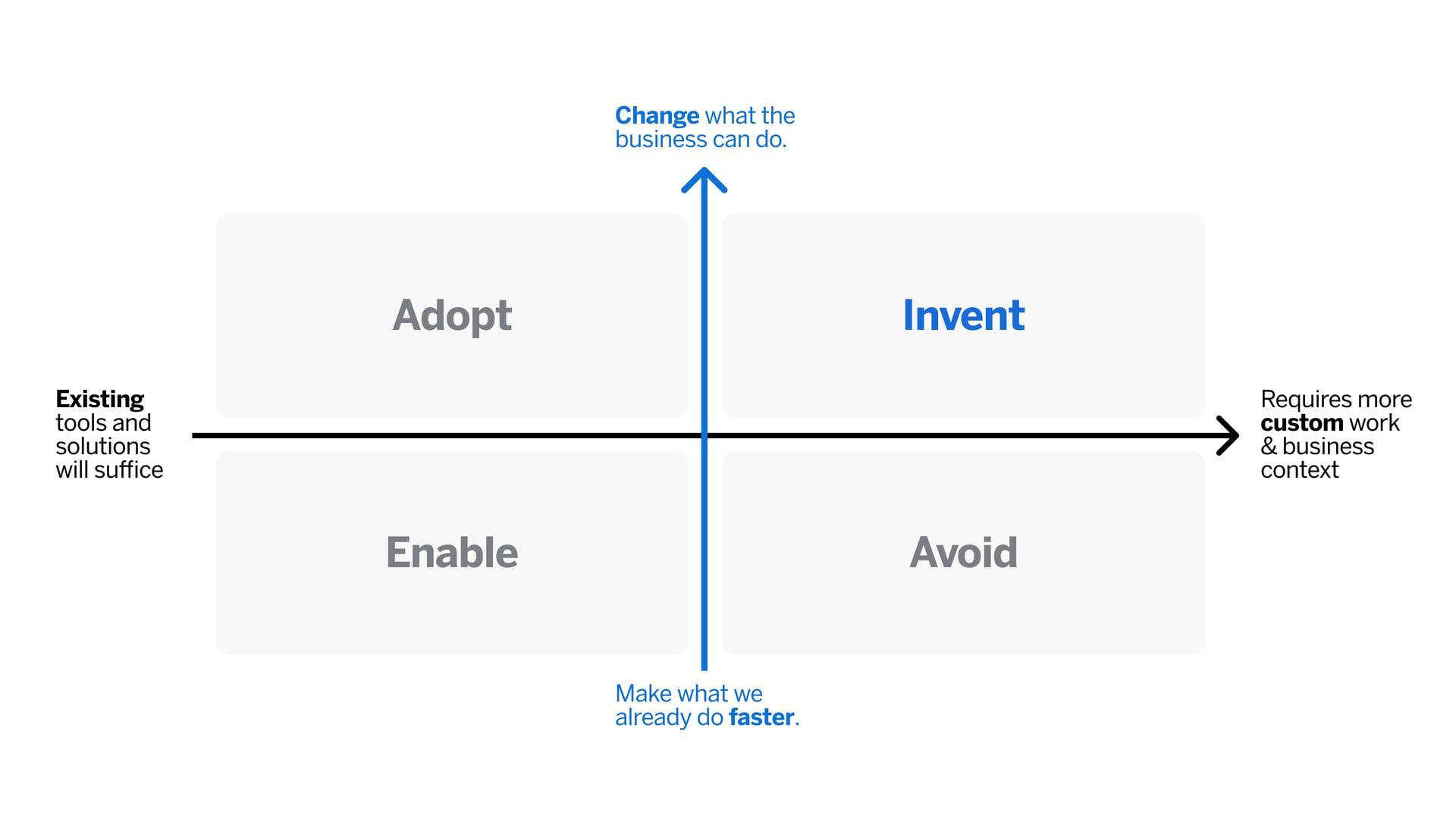
Our Intelligent Invention framework offers a way to assess your ideas and decide what level of investment they’re worth. By breaking down the effort and impact of your idea, you can assess what’s truly worth inventing.
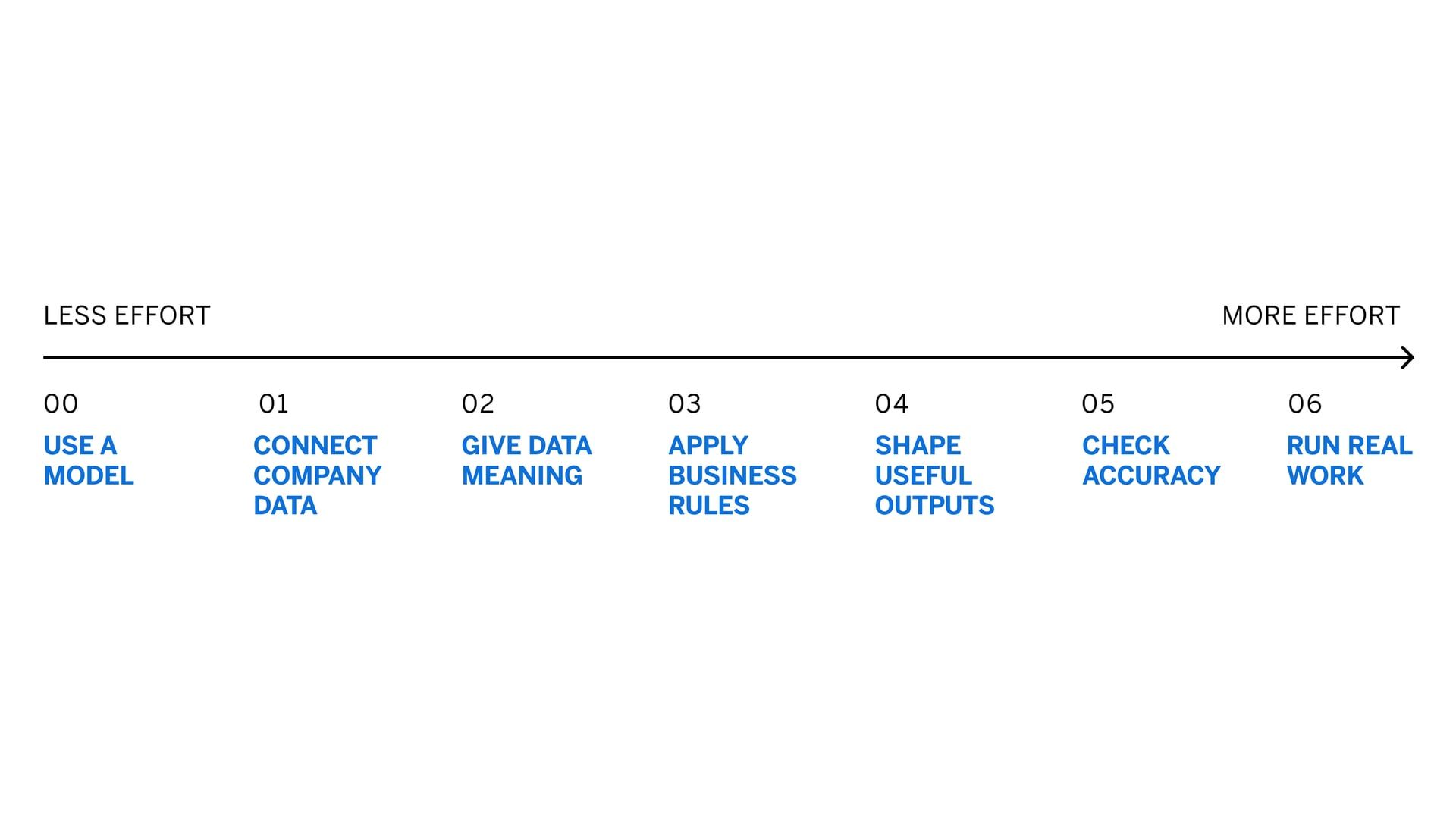
A / Effort
How much work will it take to give the AI the context it needs to work for your business?
As soon as your idea starts to need complicated business rules to be effective, you’re looking at custom development. If you can accomplish your goal with a model, connected to your data with context on how to use it, general purpose or off-the-shelf AI can likely meet your needs.
B / Impact
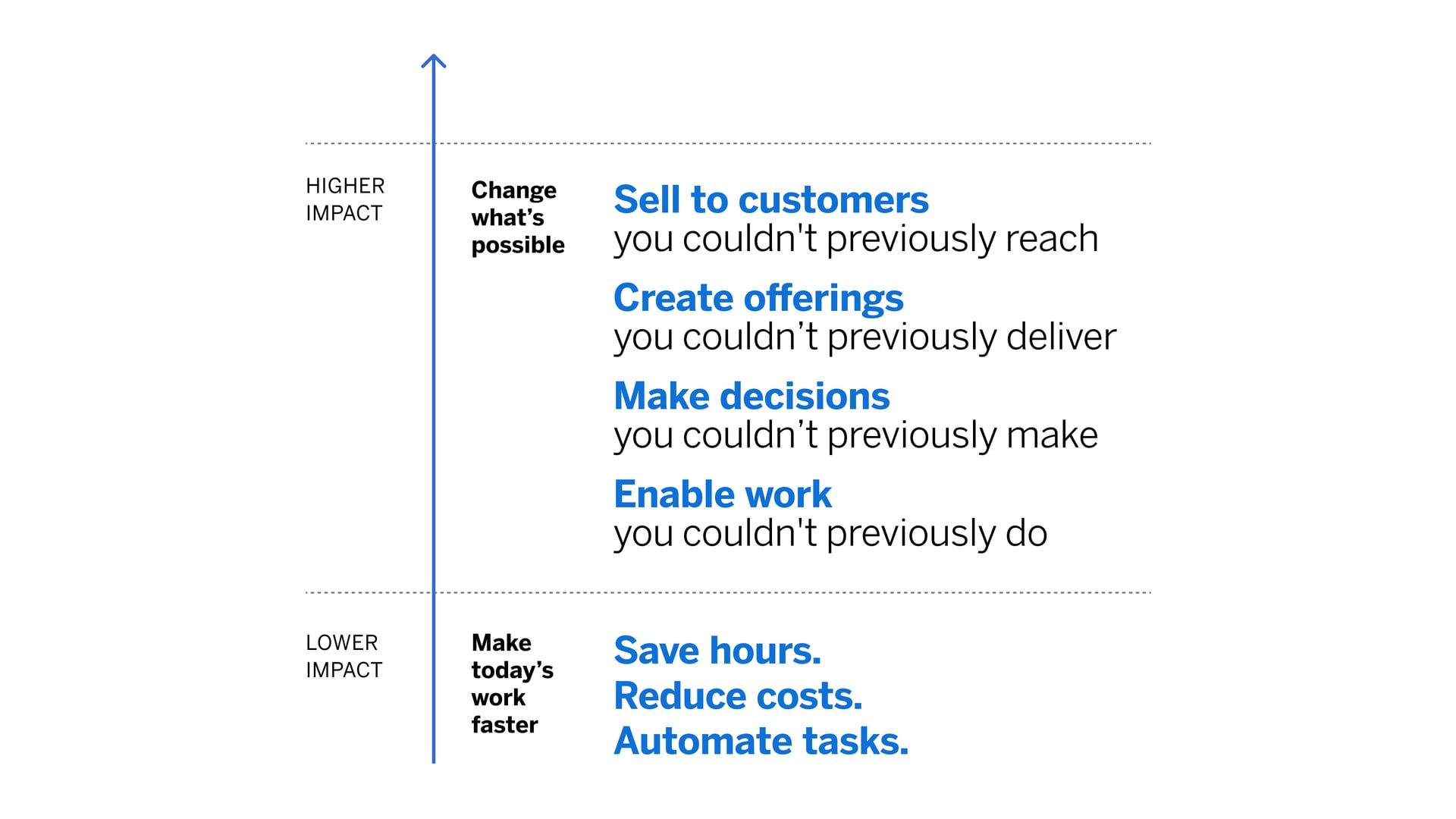
Will this make the business faster or change what the business can do?
If all your idea does is make today’s work faster, it’s lower impact. It becomes higher impact when it begins to change what’s possible
Deciding What to Invent
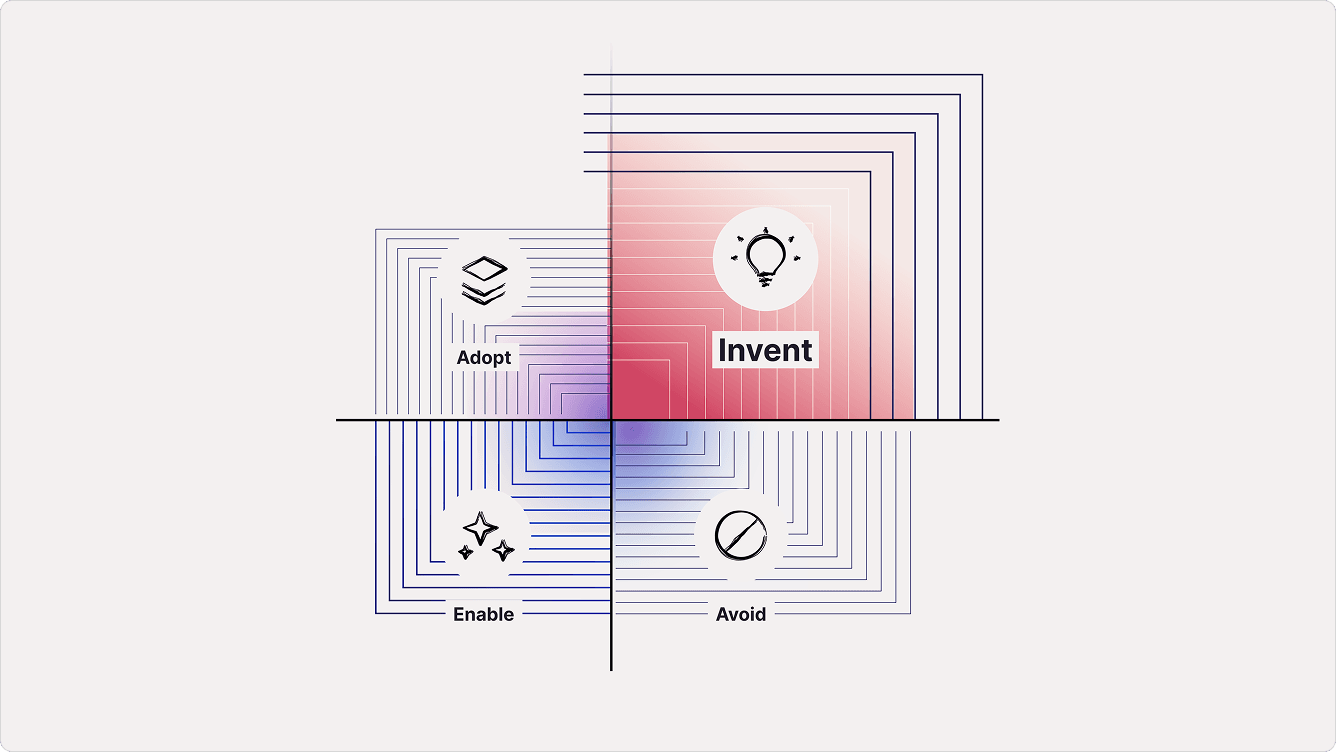
These two questions help you find the idea worth inventing. Most ideas will land in the other three zones, where a tool you can buy or already own does the job. The Invent corner is different because it’s based on intelligence competitors can’t buy, built on the context only your business holds. We see two big places to look for it, decision systems and market systems. Here’s what each zone means, and how to tell when you’ve found an idea worth investing in.
Make Your Next Investment Decision
The most agile companies realize that their AI investment choices aren't created equal. Some call for custom tooling. Others are well served by off-the-shelf platforms. The Four Bets helps you tell which is which.
Finding the idea comes first. Part 1 helps you spot the opportunity to target and an idea worth inventing. If you're still not sure where to start, try our invent experience. It walks you through five steps, from naming an opportunity to telling its story:
- Name the opportunity your unit is tasked with inventing.
- Explore ideas across the seven areas, or generate three suggestions.
- Score impact and effort and see which of the four bets it lands in.
- Find a sponsor and funding, from your unit's budget to an innovation fund.
- Write the story: one person, one moment, one tagline.
Or bring us the space you want to explore, whether that's the focus area you picked in Part 1 or a market, product or process you're thinking about. We'll help you build the brief for an idea worth inventing, and calibrate the right mix of bets for your most pressing opportunities.
Ready for an AI initiative with real impact?
Let’s work together to bring your idea to life whether that's estimating its value against the metrics that matter to your team to assessing the effort and context engineering needed to build it.
Get in touchRelated Articles

Global Navigation
# IA Collaborative
> Navigation Map