Seven Questions to Ask Before Your Next AI Investment

Dan Kraemer
Co-Founder & Co-CEO
Deciding where your AI budget goes next is daunting when what’s possible changes every month. What’s certain is that you can’t wait for a clear signal.
What’s certain is that you can’t wait for a clear signal.
From November 2024 to August 2026, there were no commercial personal agents. Then, in about 60 days, Meta, OpenAI, Anthropic, X, and Instinct (a $20 billion startup) each launched one.
For a leader tasked with building new things, that changes who you build for. The next product you launch has two audiences: the people you designed it for, and the agents they send ahead of them. And that’s one shift, in one quarter. The next seismic change is likely already on its way.
While we can’t predict the future, we do know where it will happen. For more than 20 years, we’ve used the 7 Elements of Design Innovation™ to guide innovation strategy. The framework identifies the seven places where teams innovate at the intersection of what’s possible, viable, and desirable. Even as technology rapidly evolves, the core elements stay consistent.
What changes is how businesses address each one of these elements in the intelligence age. We turned them into seven questions you can ask yourself about your business to make sure you’re building at the forefront.
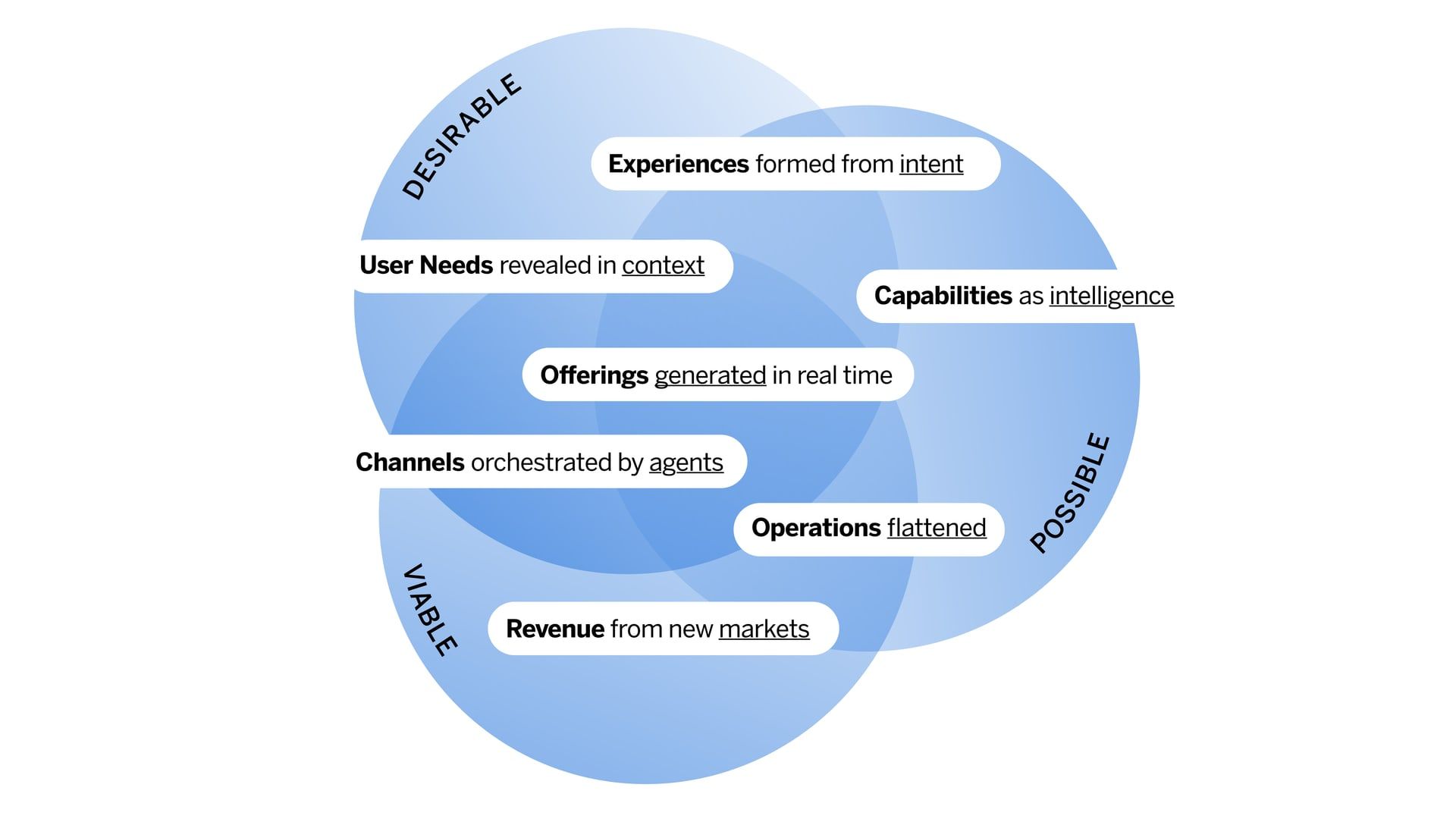
A visual of the seven elements diagram with a venn diagram labeled desirable, viable, and possible with each of the seven points below listed at the interesctions.
Seven Questions For the Intelligence Age
It’s easy to feel paralyzed with the rapid pace of change. These seven questions give you and your team clear areas to play in, so you can pick one place to start.
01 / User needs revealed in context
What to ask
Do we have a way of understanding what customers need as they reveal it, in the moment?
What’s changing
Assistants used to lack context. Now AI can read it as people show their intent. Winners will build a more authentic context exchange. And that investment pays off—Alexa for Shopping users, who are recommended a single product based on context, are 60% more likely to purchase.
What to try
Pick one touchpoint, like support chat or search. List the intent signals your team only sees after the decision is made. Test capturing one of them in the moment.
02/Experiences formed from intent
What to ask
Does the experience form around what each person is trying to do, or do they follow a fixed path?
What’s changing
The purchase funnel of today is a multi-step journey: search, filter, compare, check out. Experiences of the future will break out of this framework to center around intent—teleporting customers to what they came for, oftentimes in a less linear fashion. But, that doesn’t mean missing out on discovery. Users of Doordash’s new conversational “Ask DoorDash” feature describe a meal or share a recipe rather than navigate categories. They buy 60% more unique items, with 50% higher basket values compared with those that go through categories.
What to try
Pilot a “tell us what you’re trying to do” entry point next to your current navigation for a small group.
03/Channels orchestrated by agents
What to ask
Can a customer's agent find you, understand you, and do business with you?
What’s changing
With the explosion of personal agents, the future users of your website will be agentic in addition to human. This new audience asks different questions. They’re focused on what information you can share and if you’re a good fit for what the user has requested. Winners in this space will publish machine-readable answers about who they are, what they do, and what they don't. Walmart has opened commerce to customers' personal agents, and sees ChatGPT sending new customers at twice the rate of search engines.
What to try
Ask an AI assistant a buying question in your category. See whether it can find, understand and recommend you. Then publish one machine-readable page on who you serve, what you do and what you don’t.
04/Capabilities as intelligence
What to ask
Does your business’ context sit close enough to decision-makers that they can access it in the moment they need to act?
What’s changing
Research, transcripts and data keep piling up, and the people deciding rarely see them. In the future, teams will be able to access this context sooner, decide better, and act earlier. We’ve written about how research-grounded behavioral personas can close this gap and have our own tool, Signal, that scans the sources a leader chooses, ranks emerging futures by likelihood, impact and readiness, and turns them into a brief the leadership team can decide on.
What to try
Choose one recurring decision, like roadmap prioritization. Create a lightweight agent using tools you already have that connect them to the information they need and track the types of questions they ask it.
05/Operations flattened
What to ask
Can teams make decisions where the work happens, without waiting on approvals?
What’s changing
Decisions have historically had to climb a hierarchy because authority sits at the top. A system can now check authority, budget and safeguards at the point of decision. Winners design for outcomes, not approvals. For example, Lenovo's Monterrey factory uses an AI-powered Manufacturing Control Tower to help workers identify root causes and solve production problems directly on the shop floor, rather than asking a manager or waiting for training.
What to try
Pick one low-risk decision that currently waits on approval. Define what “good” looks like for it: the criteria, budget limits and safeguards. Then have an agent review each decision against those criteria.
06/Revenue from new markets
What to ask
Do you have a way to earn from agents, marketplaces and new markets?
What’s changing
Revenue is getting more complex. Agent marketplaces are a new place to sell, and agents that mediate purchases add new fees, from a cut of each transaction to payment for placement. Once you've built a substrate (the data connections, skills, rules and context behind your AI), packaging it for another customer group costs far less. Winners will sell what they know in every market they can reach. That market is already forming: AWS Marketplace now lists over 2,700 AI agents and tools, so a business can package what it knows as an agent or skill and sell it where enterprise buyers already shop.
What to try
Pick one thing your business does well. Package it as an agent or skill, list it in one marketplace, and run it for 90 days. Track revenue from the listing and new customers it brings in.
07/Offerings generated in real time
What to ask
Could you make exactly what a customer needs, in-the-moment, from one intelligence layer?
What’s changing
A substrate is the intelligence layer each project builds on: data connections, skills, rules and context. When one exists, a digital offering can form around each customer instead of asking customers to adapt to a fixed product. That means loyalty built on getting it right, more customers served, and no backlog. Rapid prototyping tools already enable this with products like Lovable assembling a working product with interfaces, databases, authentication, and workflows from just a description.
What to try
Find a small internal need, like creating custom offering pages for unique clients. Prototype solving it through in-the-moment generation from your company’s substrate.
Score Yourself
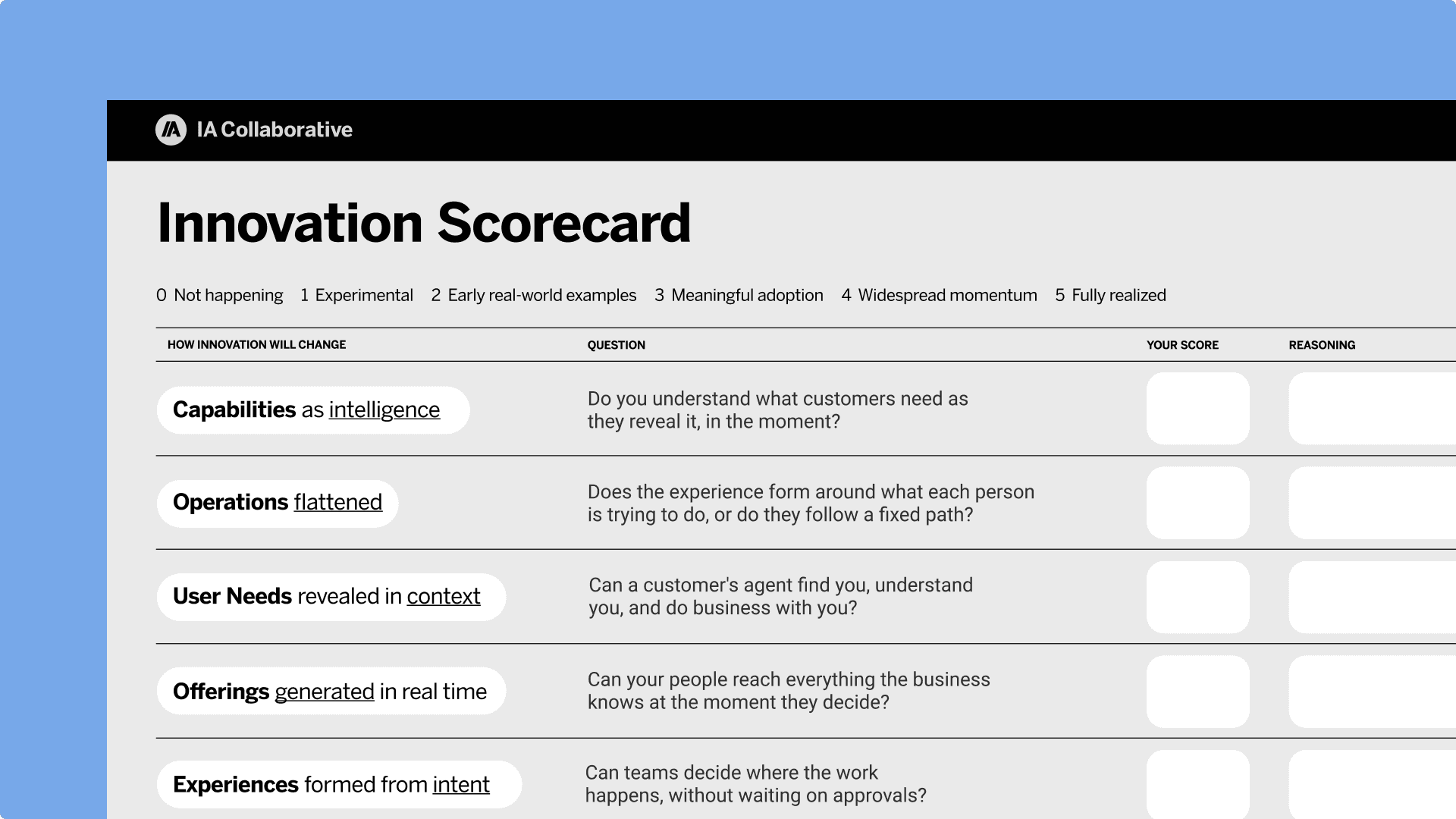
For each question, rate your own business’ approach on this scale from 0 to 5.
- 0 Not happening
- 1 Experimental
- 2 Early real-world examples
- 3 Meaningful adoption
- 4 Widespread momentum
- 5 Fully realized
You can use our Innovation Scorecard worksheet [download here] to document where you stand on each element. Pick your two lowest scores. Those are the conversations to have with your team this week.
What's Next
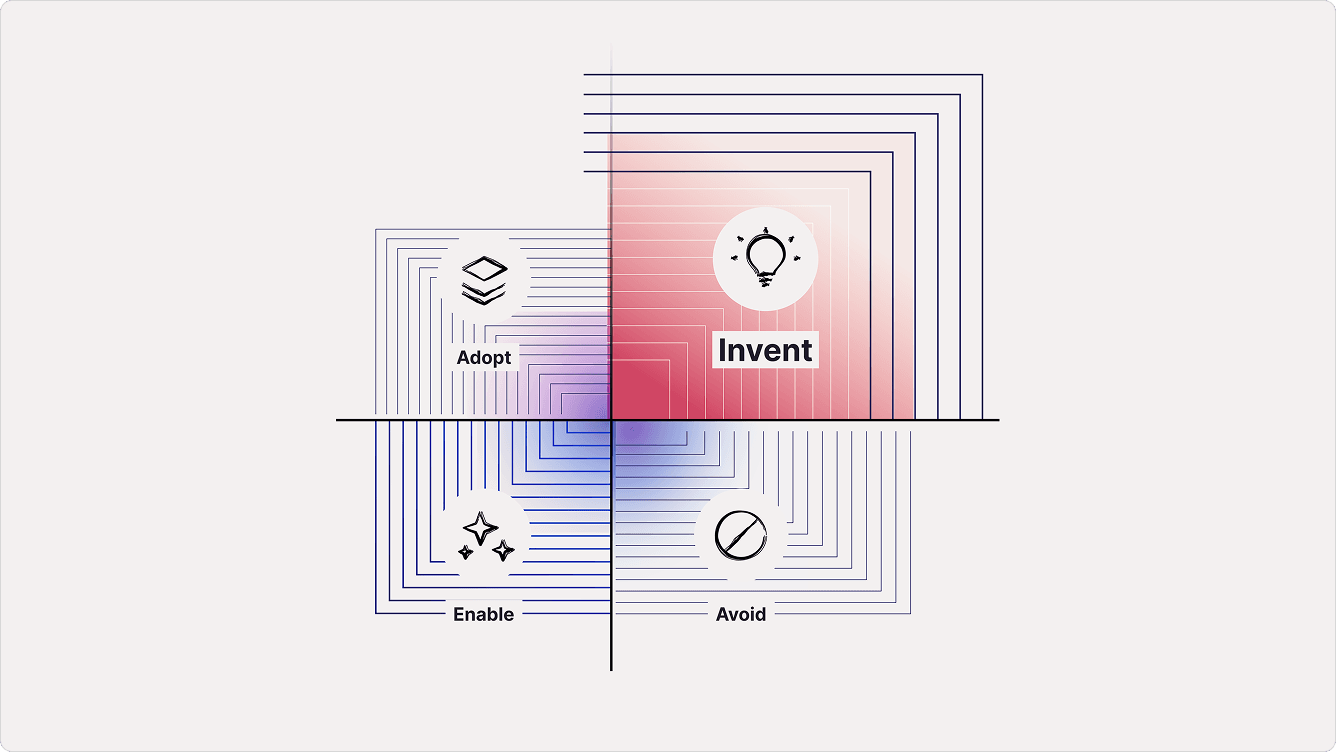
Seven areas won't all get funded at once and not every gap is worth building for. In Part 2, we show how to sort each opportunity into four choices: use general AI as is, buy a tool, skip it, or build it yourself. It ends with a hands-on tool that takes you from a scorecard gap to a story you can bring to your CEO.
Want expert guidance on where to invest first?
Reach out to book a free 60-minute scorecard session. You’ll leave with a clear idea of where you stand today and an AI investment brief you can bring back to your team to build what’s next.
Get in touchRelated articles
Global Navigation
# IA Collaborative
> Navigation Map