Loyalty is the wrong target for a new service. Build the habit first.

Hana Yaginuma
Senior Lead, Program Management
A New Service Wins When People Stop Deliberating
If you work on a service people have never used before, you know the pattern. Sign-ups pile up. Some people ride once. Many never ride at all, and the account just sits there. For an autonomous ride-hailing service, converting people who signed up but never rode is as big a problem as winning new markets. A home-sharing marketplace hit the same wall before its IPO, with a base full of accounts that had never booked or hosted. People knew the name. They just hadn't acted on it.
So we don't set the goal at registration, a completed first ride or even loyalty. The opportunity is turning all of that into habitual, mutually valuable behavior. The service becomes the thing people reach for without deliberating, and both the rider and the business get something real out of every trip.
That changes what counts as evidence. Ask people about a new service and you mostly hear attitudes: "I trust it." "I like it." "I intend to use it." Those are worth collecting. They signal potential, but they don't prove anyone will follow through.
The stronger signal is observable behavior under real-world conditions: time pressure, complexity and competing choices. Picture a rider who tells you she trusts the car completely, then opens a different app when she's running late for a flight. What she did in that moment tells you more than anything she said in the interview. Habit shows up in choices like that one, made quickly and without much thought, and that is where a new service either becomes the default or quietly drops off the home screen.
Each Stage Fails for a Different Reason, So Each Needs Different Research
A single activation study asks one question of the whole path: why don't more people use this? That question has no single answer, because the path isn't one thing. For an autonomous ride-hailing service, we map it as two areas and research them separately.
- Area 1 | Before Registration. Awareness → Education → Consideration → Sign-up.
- Area 2 | After Registration. Onboarding → First Ride → Discovery → Repeat Use.
Early on, people stall on trust and understanding. They can't picture how a car with no driver behaves, so they don't sign up. Closer to the first ride, the problem shifts to price and value clarity: what it costs, and why it's worth trying over the app they already use. After that first trip, the question is usefulness in everyday life. Does it fit the commute, the airport run, the late night home?
So before any fieldwork, we write hypotheses about what drives or prevents registration, first ride and repeat use: price, value, education, trust, features and key touchpoints. Tying each hypothesis to a stage tells you what to watch for, and whom to watch.
The end of the path needs the sharpest distinction. Loyalty is an attitude: "I prefer it when I'm considering rideshares." Habit is a behavior: "I book it automatically. There is no consideration." A loyal rider still weighs options on every trip. Research that stops at preference never reaches the stage where the service becomes the default.
The same stage also breaks differently for different people, so the sample has to allow comparison: mature vs. newer markets, local vs. visitor, Early Adopter vs. Early Majority. An Early Adopter may register out of curiosity and stall at repeat use. The Early Majority often won't reach sign-up until someone like them has gone first.
Benchmark Outside Your Category to See What Good Activation Looks Like
When your service is new, your direct competitors are working on the same unsolved problems you are. Copying them only teaches you their guesses. Other industries have already moved people past trust barriers and into new behavior, so we run analogous immersions in them to see how they solved the human and business problems you now face. For an autonomous ride-hailing service, that means studying emerging-tech categories that required behavior change, such as smart home, wearables and telehealth. It also means treating rideshare as the functional analog.
Each analog teaches something specific:
- Digital onboarding. Next-gen onboarding experiences show what good progressive disclosure looks like in practice.
- New tech sales. EV test drives and experiential marketing and retail let people discover new technology safely and turn curiosity into confidence.
- Autonomous interactions. Smart home and automation products like Nest and centralized home hubs show how automation builds trust and communicates with the people it serves.
- Lapsed users. Fitness apps, streaming services and other digital-physical hybrids make re-engagement easy and consistent use rewarding.
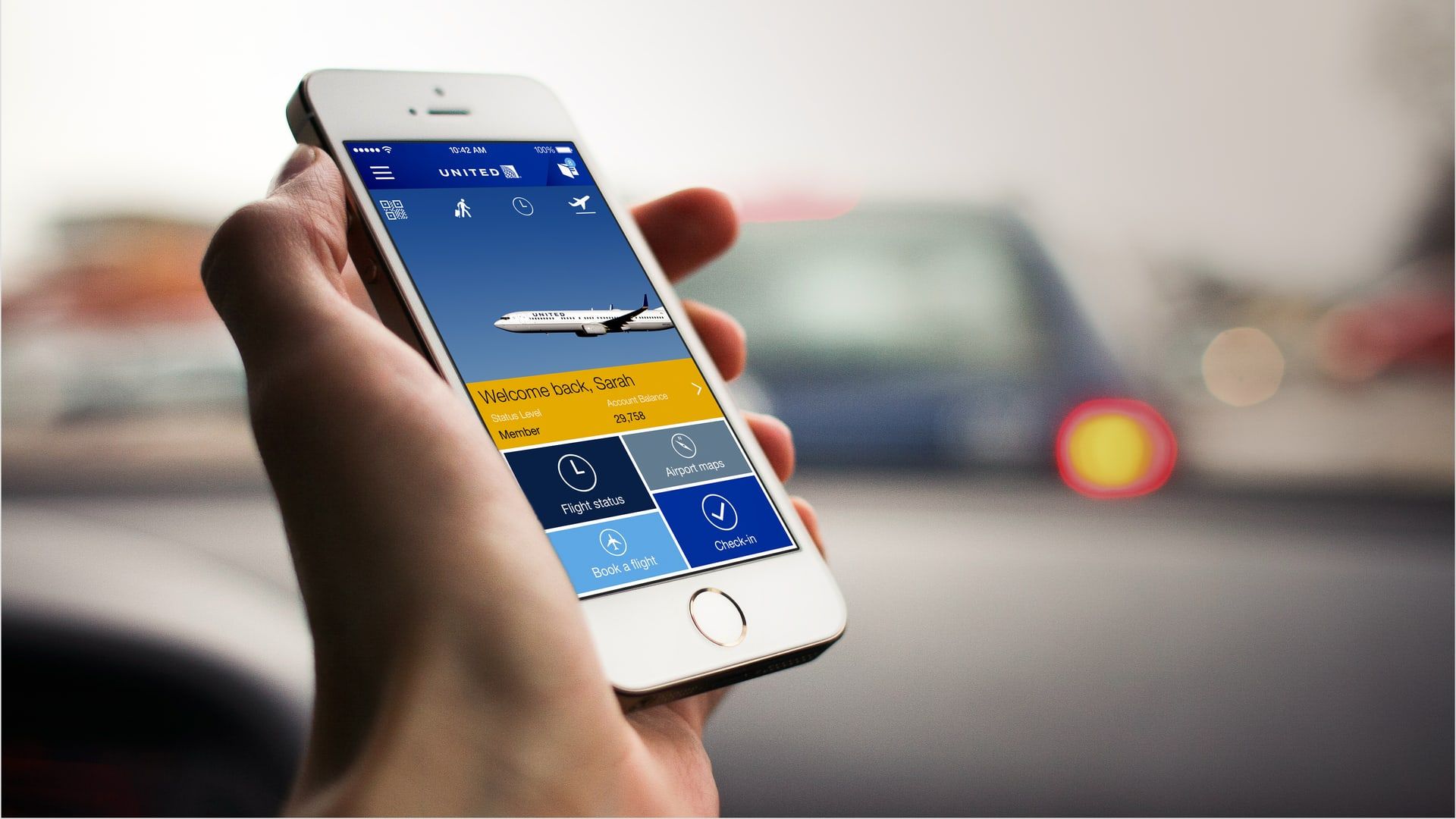
Then turn the same eye on your own journey. Audit every touchpoint a new user meets: the website, the app and registration, email, in-vehicle screens, the physical experience, and the communications before and after registration. Judge the benchmarks and your own experience against one set of criteria. How well does each communicate value, reduce registration friction, build trust, educate users, support first use, introduce features and encourage repeat engagement?
If leaders need convincing, take them along. A field trip to an industry that accelerated adoption despite significant trust barriers changes minds faster than any readout.
What comes out is an Activation Pattern Library of principles, examples and opportunities, plus a set of Initial Hypotheses that give the primary research something sharp to test.
Study Four Kinds of User, Not Just the Successful Ones
People who haven't tried it yet
Follow them from exploring through registration, first booking and first ride. Ask: what would make you try it?
People fresh from their first ride
Capture how they reflect on confidence, value, friction and their intent to ride again. Ask: what nearly stopped you?
People who signed up and stalled
Learn why activation stalled, what information or reassurance was missing, how they see value and price, and what got in the way. Ask: what would have to change?
People for whom it's already routine
Reverse-engineer strong journeys: what built confidence, what made the first ride happen, what sped up repeat use. Ask how Early Majority riders may differ.
Watch People in Context, Because Trust Gets Decided in the Moment
We treat research as creative work. The job is to get as close to the real experience as possible. A conference room is a long way from the curb where someone decides whether to get into a car with no driver. Trust in a new service is won or lost at specific moments: the pickup pin that lands on the wrong side of the street, the pause before the door opens, the first turn taken with nobody at the wheel. People rarely remember those moments accurately a week later, so you have to be there.
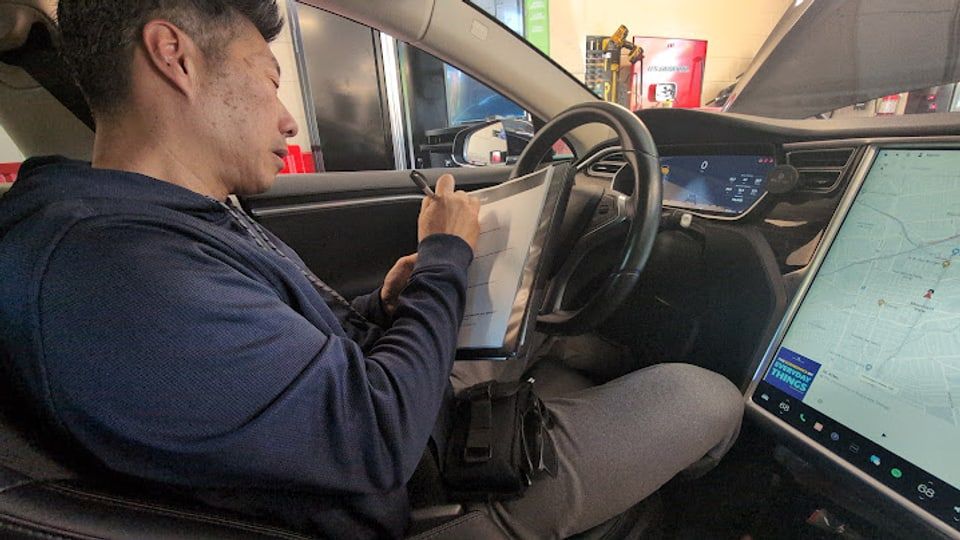
For an autonomous ride-hailing service, that means activation ride-alongs. Researchers accompany new riders from initial download through first trip planning to arrival. They watch for frictions, hesitations and moments of delight across the digital and physical experience. The point is to see how that first end-to-end trip shapes confidence, and whether it makes a second one likely.
Ride-alongs capture one journey. Virtual diaries capture weeks. Users with varying levels of AV experience document their journeys, with the new service and with traditional rideshare, through screenshots, photos, messages, videos and voice memos. That puts the service inside real mobility behavior rather than studying it in isolation.
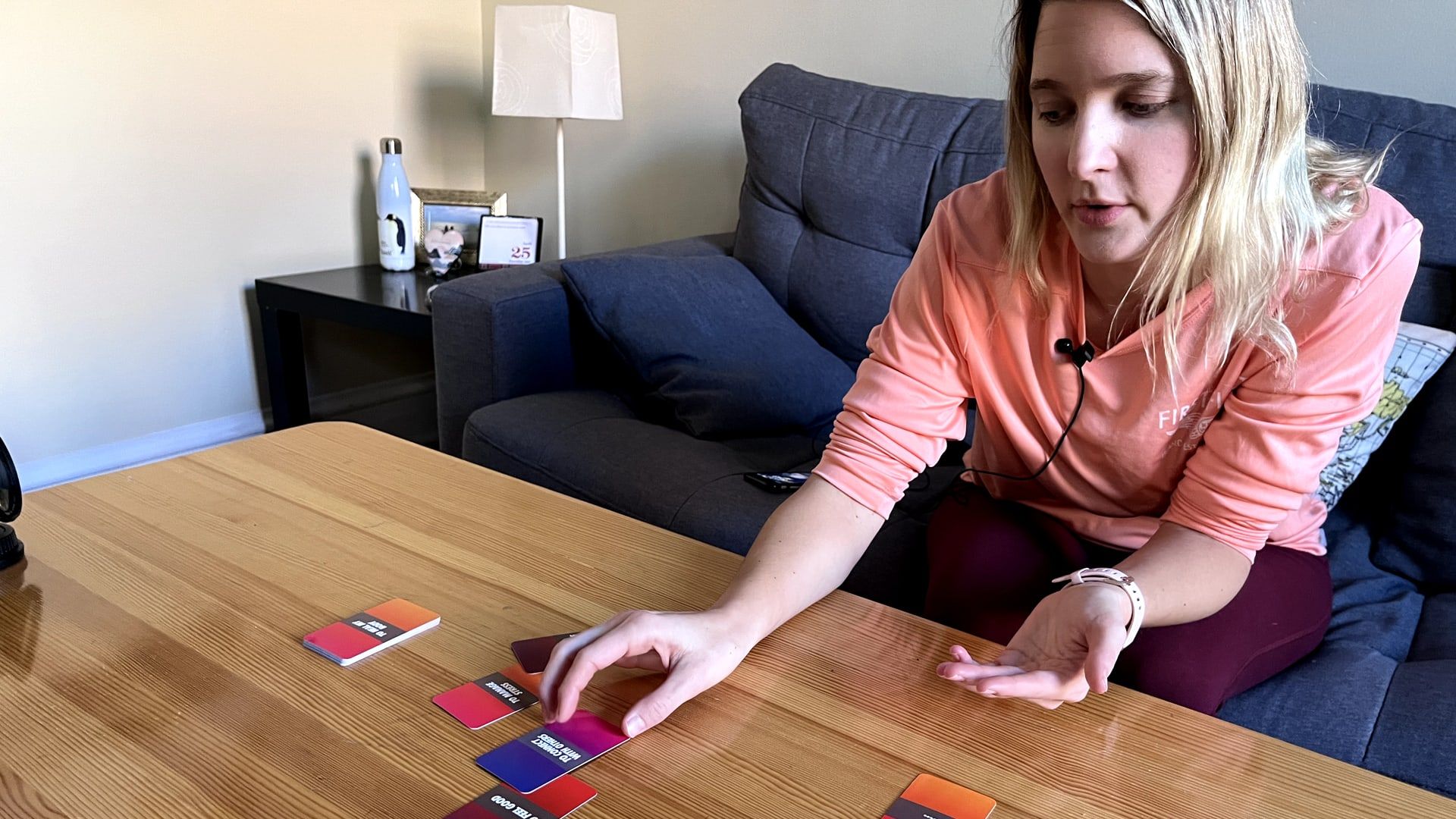
Then there is sequencing. Progressive disclosure testing uses card sorting or clickable behavioral prototypes to find what riders need to know, and when and where they need it: before registration, after registration, during the first ride or later.
What people share publicly counts too. Social analysis of videos about first-time driverless rides showed 94% positive sentiment among first-time riders. It also showed what they love and what worries them.
None of these methods works alone. We design mixed methods to uncover the why behind the click, and we treat market research and UX research as one initiative. That way the numbers and the stories explain each other.
“I book it automatically. There is no consideration.”
— The habit, in a rider's words
Turn Findings Into an Activation System, Not a List of Fixes
Most research readouts end with a list: this screen confuses people, that step loses them. That's useful, and it's where most teams stop. A novel service needs an activation system, a specification of how the organization orchestrates education, reassurance, utility and delight across the entire new-user journey, and which function owns each moment.
It starts with synthesis across markets and user types. Compare the barriers before registration with the ones after it, because they are rarely the same. Then separate universal needs from market- or segment-specific ones. That split decides what you build once and what you tailor.
Touchpoint mapping lays today's touchpoints against what people need and finds the moments to inform, reassure, demonstrate value, prompt action, introduce features or encourage repeat behavior. Many of those moments sit outside the app, in marketing, operations or support. So ownership has to be written down. The Progressive Disclosure Framework then sequences the work: what to communicate × when × where, with opportunities prioritized by impact and feasibility. Alongside it sits an Activation Barriers + Accelerators Framework and a set of next-stage experiments, so the team knows what to test first.
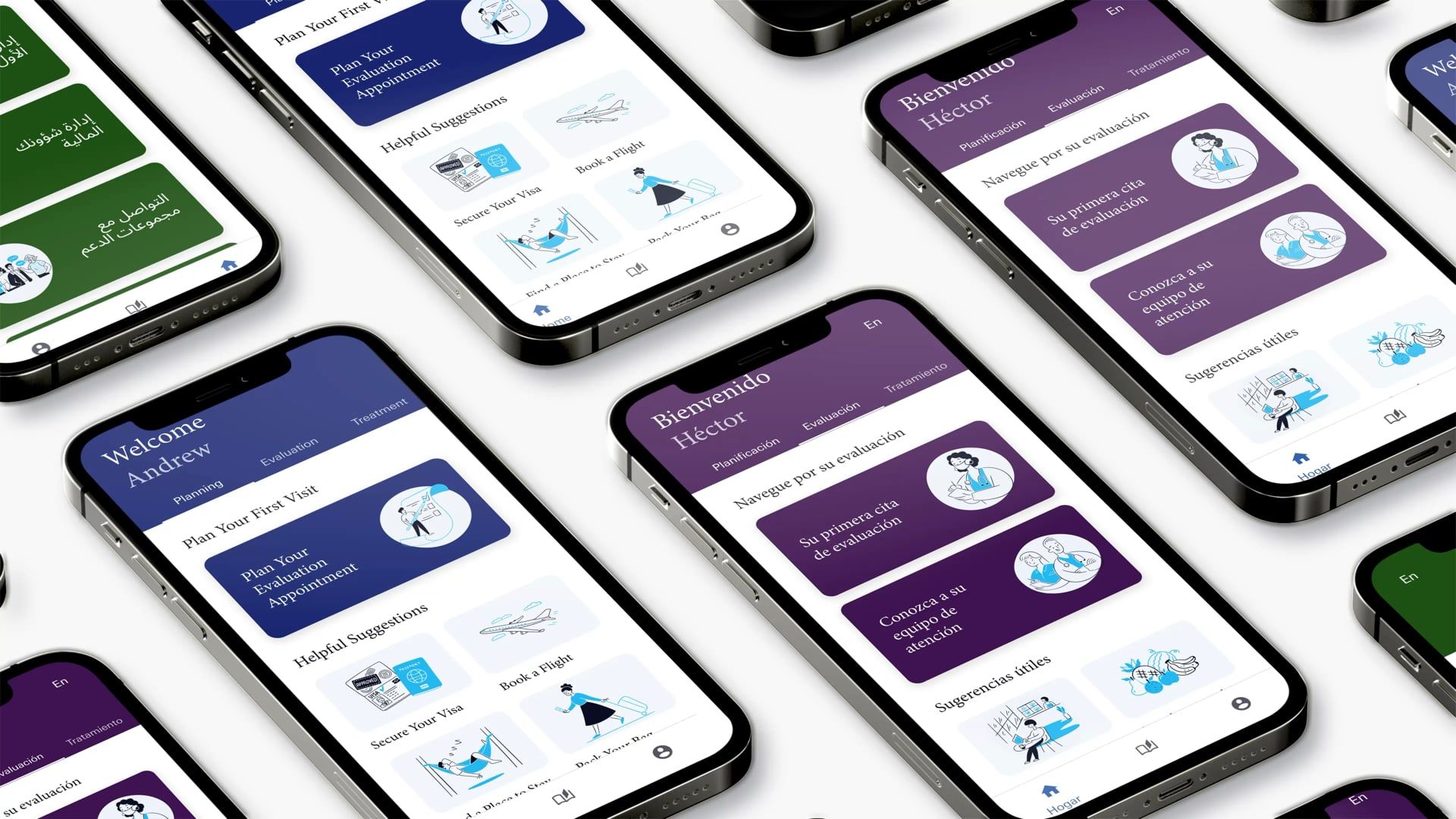
Segments earn their keep when they are defined by activation goal. In our work with a global home-sharing marketplace, millions had created accounts and never booked or hosted. Each segment got a goal: create confidence to try, turn trial into engagement, build awareness and initial trust, or create enduring mutual value. One move changed the first step for everyone. Protection extended to both sides of the marketplace eliminated the barrier to first-time trial.
The trust threshold moves when you design for it. With a voice-first commerce platform, we identified what would lead people to explain their most personal needs to a device. Voice-first shoppers are 60% more likely to transact.
Start Where People Stall, and Design the Second Ride Before the First
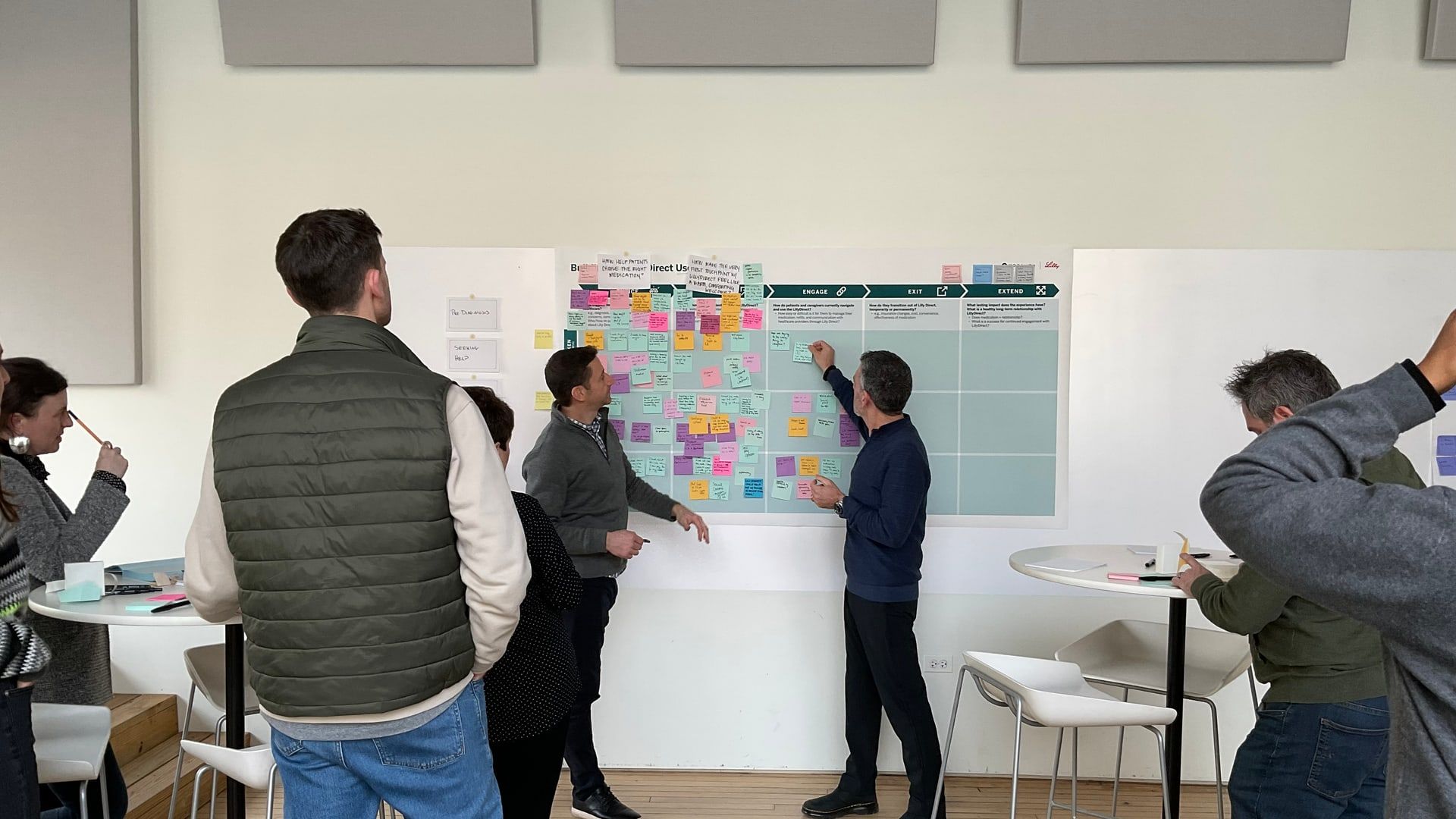
Treat the four phases, Benchmark, Frame, Deep Dive, Recommend, as a way of thinking rather than a project plan. Benchmark shows you what good looks like in categories that have already beaten a trust barrier. Frame turns your business questions into hypotheses about behavior. Deep Dive watches those hypotheses meet real life. Recommend turns what you saw into an activation system that someone owns.
The first move is cheaper than most teams expect. Interview your dormant users: the people who registered and never rode, or rode once and stopped. Their reasons are specific, and usually fixable. Then map the journey before registration and after it as two separate problems, because trust and understanding sink the first while everyday usefulness sinks the second. Decide what people need to learn at each stage, and in what order, instead of packing it all into onboarding.
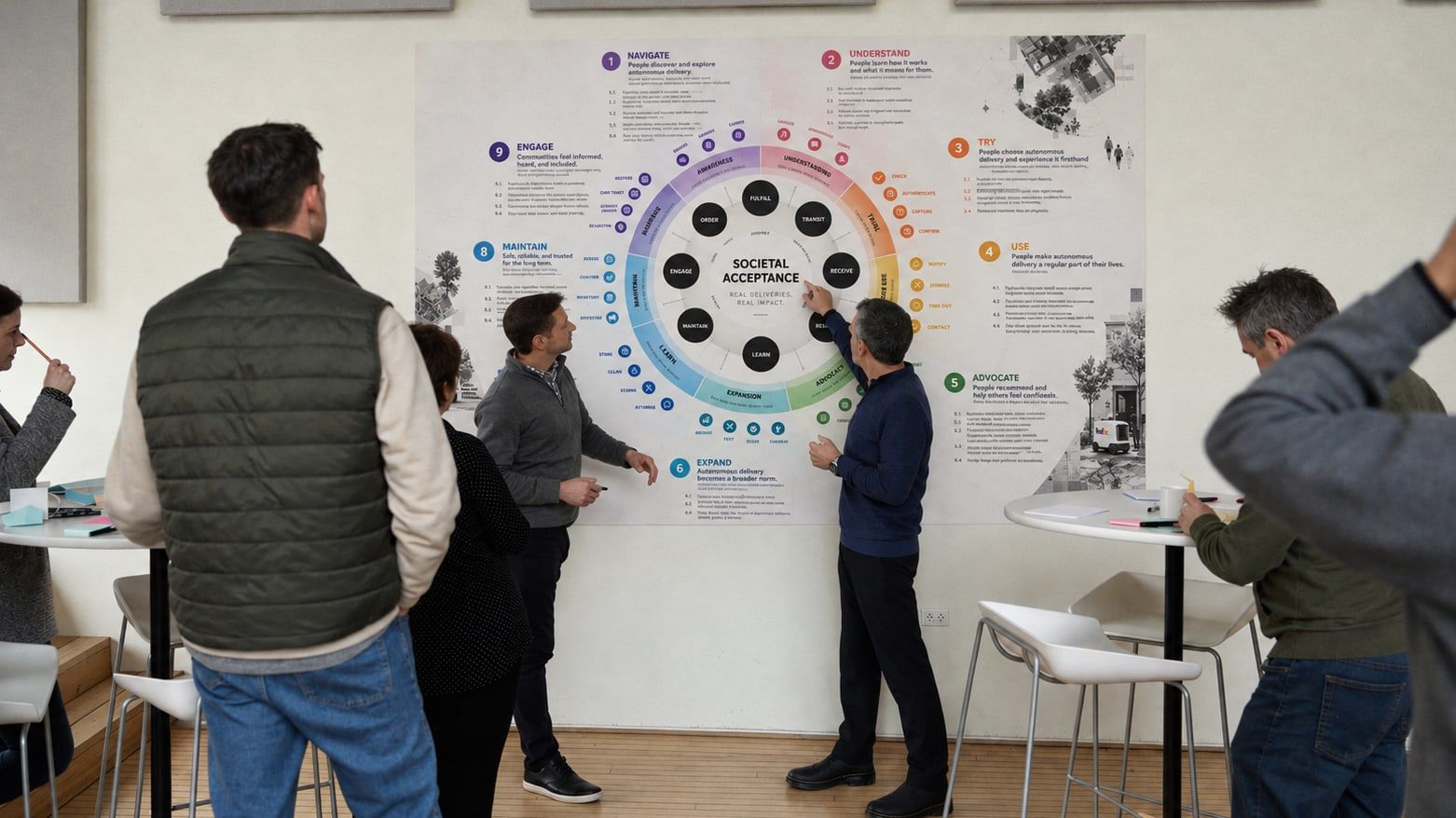
How communities adopt what they didn't ask for can be studied. A global logistics company's autonomous delivery had to earn community trust from scratch across bots, unmanned vehicles and drone systems. We observed, prototyped and co-created with users across the full range of aptitude and perception, and built a Societal Acceptance Model that maps how municipalities, industry partners and early adopters move through awareness, trial and advocacy. The same discipline of designing for adoption shaped app-based tracking now used over 10 million times a day, and last-mile delivery that scaled to 34 markets in 6 months.
The first ride proves the service works. Design for the second one.
Designing adoption for something people haven't tried yet?
Talk with us about researching each stage from first thought to default choice, and turning what you learn into one activation system your whole team can own.
Talk to our research teamGlobal Navigation
# IA Collaborative
> Navigation Map